6 Essentials for EVERY Paddle Outing
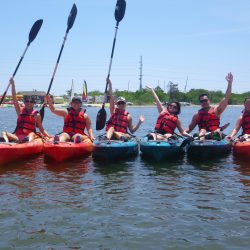
One of the most appealing things about kayaking is how low tech it is. You don’t need much to have a great time on the water. But there are a few bare essentials (in addition to a boat and a paddle) that every kayaker should take on every trip, even if it’s only a five minute spin in in the pond you know like the back of your hand. PFD (personal floatation device) No matter where, no matter how long, no matter ANYTHING, you should always, always, always take/wear a PFD. The heart-breaking loss this spring of the mother and son who jumped in a canoe to go after an errant ball reminds all of us how quickly, how unexpectedly things can go bad. Charged Cell Phone in a Dry Bag Good or bad, very
Read MoreThe Test Before the Lesson “Learning Experiences”—Long-Shore Currents by Mitch Mitchell
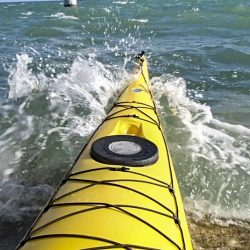
Long-shore currents form when the surf hits the beach at an angle, causing the water to move faster and faster along the shore. They aren’t a big deal if you’re aware of them. But it took two experiences—one financially painful, and the other physically exhausting—for me to learn this lesson. My financially painful experience was during my wind-surfing days in the mid-80s. I got into windsurfing early in the sport’s trajectory, at least on the East Coast. I learned in South Carolina, on Lake Hartwell first, and then in the ocean off Folly Beach with a guy who had one of the first one hundred “Windsurfers” ever made. (The term “Windsurfer” was actually the brand name of a sailboard manufacturer.) Being able to jump and surf waves on a sailboard was a blast. When I moved to
Read MoreJeepers Creepers Listen to those Peepers!
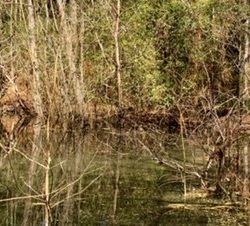
The Osprey are back. The Bluebirds have built their nests. The adorable, chubby fox kits roll and chase each other around their den. A Carpenter Bee stared me in the eye yesterday as I walked out my door. (He said, “You know, there’s not much left here. I think it’s time you built a new house. Wood, please. No concrete blocks.”) While I love seeing these seasonal residents return, my favorite sign of spring isn’t a sight. It’s a sound. Spring peepers are about the length of a paper clip but have the range of Kelly Clarkson. They are the rock stars of the spring. These prolific little frogs live in wet areas (our backyard pond is their Merriweather Post Pavilion) but their brownish-tannish-olive coloring allows them to blend so completely with their surroundings that they
Read MoreHow We Know What We Know: Tidal Changes
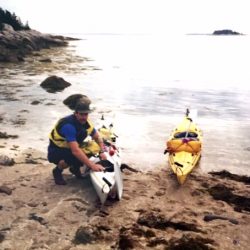
Weather forecast, water temperature, air temperature, average tidal change—these are probably four of the most important factors when planning a kayak camping trip in an unfamiliar environment, especially for a trip off the coast of Maine in late September. For our first kayak camping trip (circa 1995) we carefully considered 3 of the 4 factors. We’d launched late in the day (see previous post) and didn’t have a route in mind. But we didn’t need to. Islands spread across the chart like freckles on the cheeks of a redhead. Our plan was to paddle until we found a hospitable-looking island, pull up, and camp. Unusually warm daytime temps mixed with seasonally cool waters had resulted in a light fog settling over us and the bay. A lobster boat, engine droning yet invisible in the fog,
Read MoreThe Hard Way: How we know what we know. Part 1—Dry bags
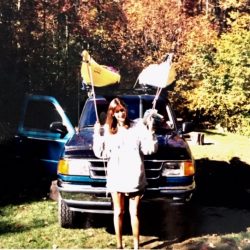
Circa 1995: We unloaded Mitch’s Sea Lion and my Scimitar from Mitch’s teal Ford Ranger, carried them close enough to the water that it was lapping at their bows, and set them down on the gently sloping, rock-strewn beach with sand the color of brown sugar. Next we unloaded all of our gear into mountainous piles on the pavement beside the pickup. Then we took our brand new roll of garbage bags (we’d sprung for the heavy-duty ones) and began bagging up our gear. In our excitement for our first kayak camping trip, two nights of island hopping off the Maine coast, we’d brought a ton of gear. We filled up bags, shoved them into bows and sterns, pulled them out, burped air bubbles, and jammed them back. More than an hour later, our hatches
Read MoreNot Your Normal Summer Tourists
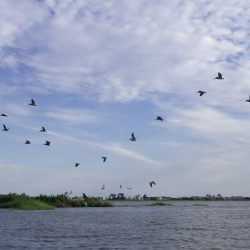
This past summer we greeted a lot of friendly faces - families from Pennsylvania, Ohio, Colorado, New York; young professionals from D.C, Philadelphia, Manhattan; retirees from Lewes, Selbyville, Millville. But some of our most surprising visitors this year didn’t drive into our parking lot. They flew and swam into our bay. Pelicans: We saw more Brown Pelicans in Little Assawoman Bay than ever before. On the ocean side, pelicans are not a rare sighting. But sometimes years will pass between sightings on our bay. However, this summer, at one point, we counted over thirty pelicans at one time circling or floating on the water near Point of Cedars Island. Pelicans are more fascinating to watch than the Weather Channel during hurricane season - the way they fold their awkward beaks sleekly into their bodies while
Read MoreCongrats to Ms. B! Delaware STEM Teacher of the Year!
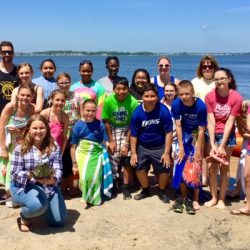
When Sarah Betlejewski isn’t guiding CK customers through the Delaware and Maryland salt marshes and cypress swamps, she is teaching science to 7th graders at Millsboro Middle School. Recently Sarah (known to her students as Ms. B) won the Delaware Middle School STEM Teacher of the Year Award. She received her award at the Delaware STEM Symposium on Oct. 8th. STEM stands for Science, Technology, Engineering, and Mathematics. According to Sarah, “STEM focuses on problem-based learning where you take a current, community-based problem and try to create solutions with technology or engineering.” Not resting with just one award, Sarah’s students are also state finalists for the Samsung Solve For Tomorrow award. Open to public middle and high schools nationwide, the goal for the contest is to integrate the student’s learning with community leader’s feedback to
Read MoreNeil Baker
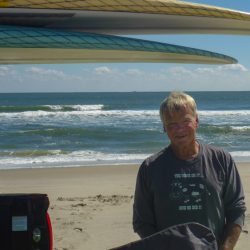
The Coastal Kayak family lost a treasured member yesterday. Neil Baker passed away in his home after his nearly two-year battle with pancreatic cancer. I find it so hard to write these words because it was not Neil’s time yet. Neil and his wife, Patty, moved to Ocean City once Neil retired from Ohio State University as a Professor of Microbiology. He started guiding for Coastal Kayak in 2010 doing 5-9 tours per week, always willing to work doubles and pick up shifts when asked. His deep-seated instinct to teach and his eagerness to introduce participants to the natural world made his tours favorites with customers. He bought small, boxed-shaped microscopes to take with him on tours so that kids could get a close-up view of even the tiniest critters in the salt marsh. His
Read MoreToughing it Out
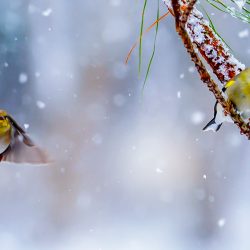
Somehow they know it’s time. Towards the end of summer, the small changes in daylight signal rituals of preparation. They flock together, watching and waiting. One morning the marsh is full of birds hunting and preening, and the next morning, usually after a strong north wind, they’re gone, those same tidal ponds eerily empty. Yet, thankfully, not all birds desert our beaches and inland bays. Throughout the winter, besides the short-lived migrations of northern birds passing through, we have hardy, year-round residents. Instead of following food sources south, they’ve figured out ways to hunt, forage, and survive in the worst of weather. One of our largest avian year-round residents is the wild turkey. They roam in flocks and when you see them run across the road or a field, it is impossible not to smile and
Read MoreFalling Marsh
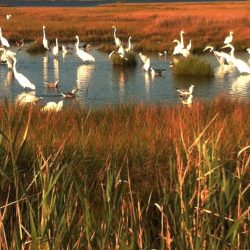
"I think the salt marsh turned brown last night," Mitch said as we were driving to Assateague yesterday. This year, with the summer-like fall we've been experiencing, the inevitable seasonal changes in the area flora took us by surprise. But no matter what the thermometer is saying, the days are getting shorter. And that means that the salt marsh has to prepare for winter. The most prevalent grass in our marshes is smooth cordgrass (Spartina Alterniflora). While it flowers July through September, in mid to late August it goes to seed. When that happens it grows fast. "In 2-3 days it doubles in height," says Mitch. "It grows from about one and a half feet to three feet virtually overnight." This can be problematic for Coastal Kayak guides. "We look at the amount of grass
Read More